First journey · Practical preparation
Your First Jinxiu Tianfu Journey: Train, Transfers and Hotel Nights
Prepare for boarding, excursions, hotel stays and the return to your cabin with a practical guide to luggage and transfers on Jinxiu Tianfu’s 2027 journey.
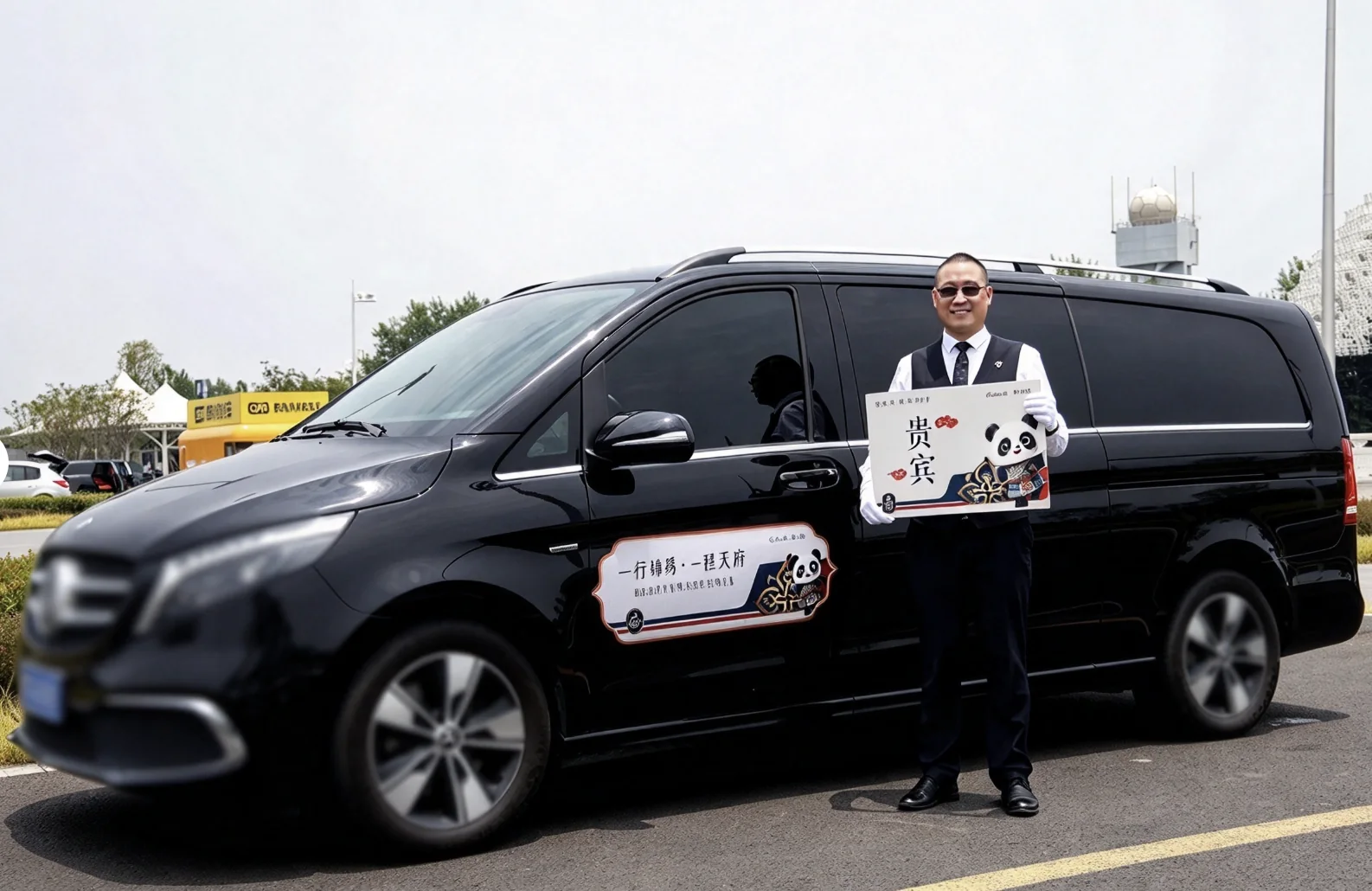
A sample transfer vehicle shown in the customer material. · PANDA TRAIN · JINXIU TIANFU customer material
On a first long train journey, the questions that slip through are often small: are we sleeping aboard tonight, where is tomorrow’s clothing, and did the spare camera battery stay in the large case? Jinxiu Tianfu’s 2027 itinerary includes time on the train, ground visits and hotel stays. Understanding those changes makes it easier to prepare before the next departure.
This guide groups the preparations by when you use your belongings. Product material supports luggage handling, Chengdu transfers and retention of the assigned cabin. Assembly details, handover times and the accommodation for each night should still be checked against your own route and departure instructions.
Before you begin
- Separate personal essentials, hotel-night supplies and larger items that can remain aboard.
- Before leaving the train, establish where you will sleep, how the group will meet and where bags change hands.
- Airport arrival, group assembly and boarding are separate appointments; check them together with your Chengdu accommodation.
Align three appointments in Chengdu
Your flight landing, hotel check-in and train assembly are separate events. The 2027 customer programme includes a complimentary hotel night in Chengdu before and after the journey, with one airport pick-up and one drop-off per room using one vehicle. After sending flight details to the team, obtain the hotel name, transfer contact and assembly instructions. You can then identify whether your personal travel plans require an extra night.
The departure outline involves assembly on the preceding evening and a train leaving after midnight. That is a reason to check the change of date carefully, rather than to buy onward transport from a provisional time. Put the assembly date and planned departure date into your calendar as separate entries. The team’s final notice should establish the station, meeting time and operating arrangements.
If companions arrive on different flights, do not assume that a transfer allocated per room automatically covers several airport trips. Put the arrivals in one short table and ask how they will be handled. The first person to arrive should not have to judge whether a later flight leaves enough time to reach the train.
Read the 2027 programme and Chengdu service context
Group belongings by when you need them
Where an item belongs depends on whether you can reach the train when you next need it. Documents, a phone, essential charging equipment, personal necessities and that day’s camera gear should remain easy for you to reach. A luggage-handling service does not remove the need to know where those items are.
Prepare a small overnight bag once the number of nights away from the cabin is clear. Include the corresponding clothes, toiletries and usual charging leads. Keep a separate day bag light enough for the planned visits. Clear purposes make both bags easier to check and help a room-mate locate shared items without reopening a large suitcase each time.
The customer material says that the same cabin is retained during the trip and large cases can remain on the train. Use that arrangement with the return-to-train schedule in mind. Once away, you may not be able to retrieve a different jacket immediately. Ask where large cases should be stored and what the team requires for locks and valuables.
Packing by access is more useful than trying to predict every possible need. Revisit the small bag when the itinerary changes, rather than adding more items to it throughout the journey.
| Group | Preparation principle | Check before leaving |
|---|---|---|
| Personal essentials | Keep them accessible throughout the day | Documents, communication devices and personal necessities are with you |
| Excursion items | Match the day’s activity and conditions | Camera equipment, batteries and suitable layers are ready |
| Hotel-night bag | Pack for the nights away from the train | Everything needed before the next return is included |
| Large case aboard | Reduce repeated unpacking | Nothing essential for the next ground section has been left inside |
Learn the cabin before unpacking everything
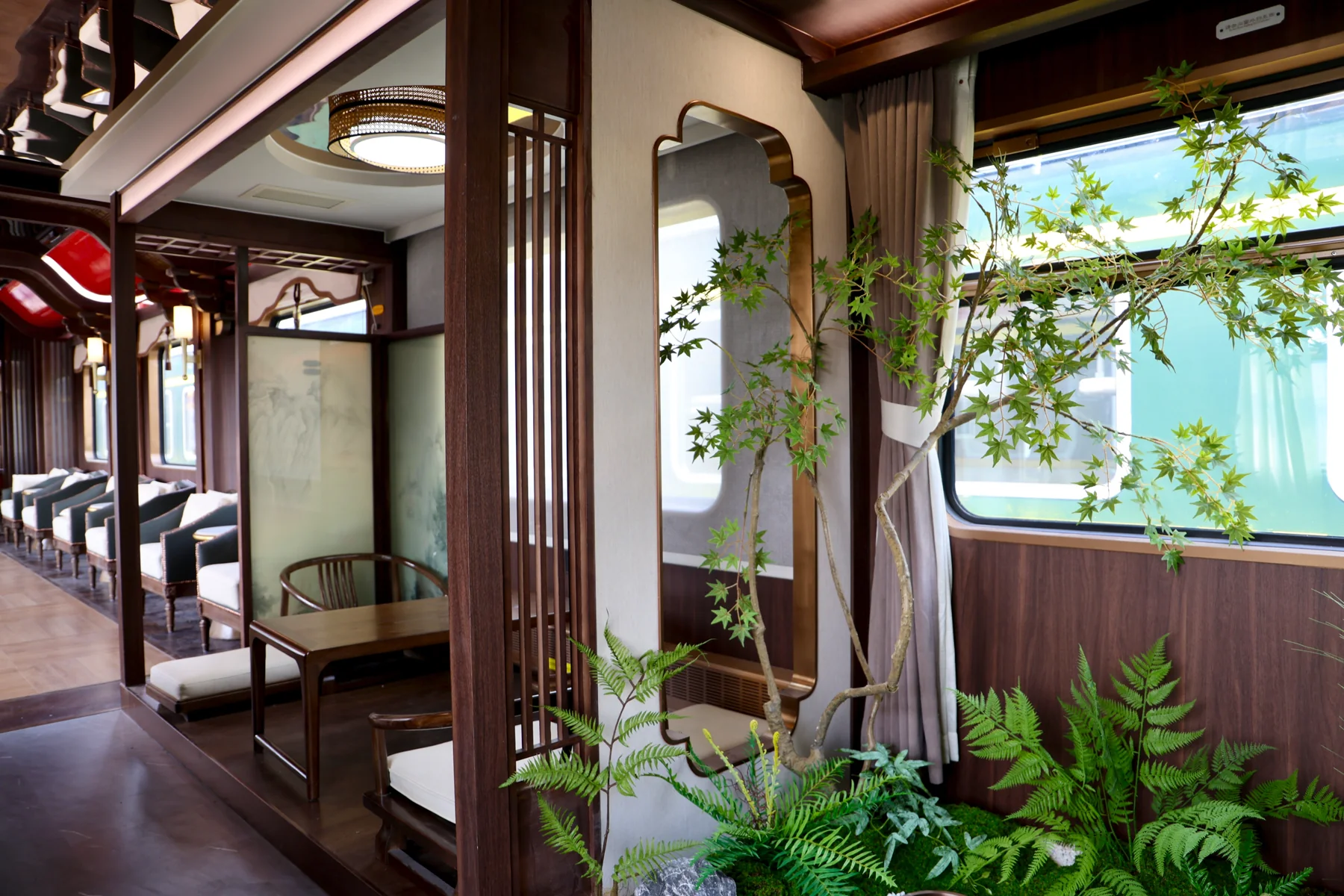
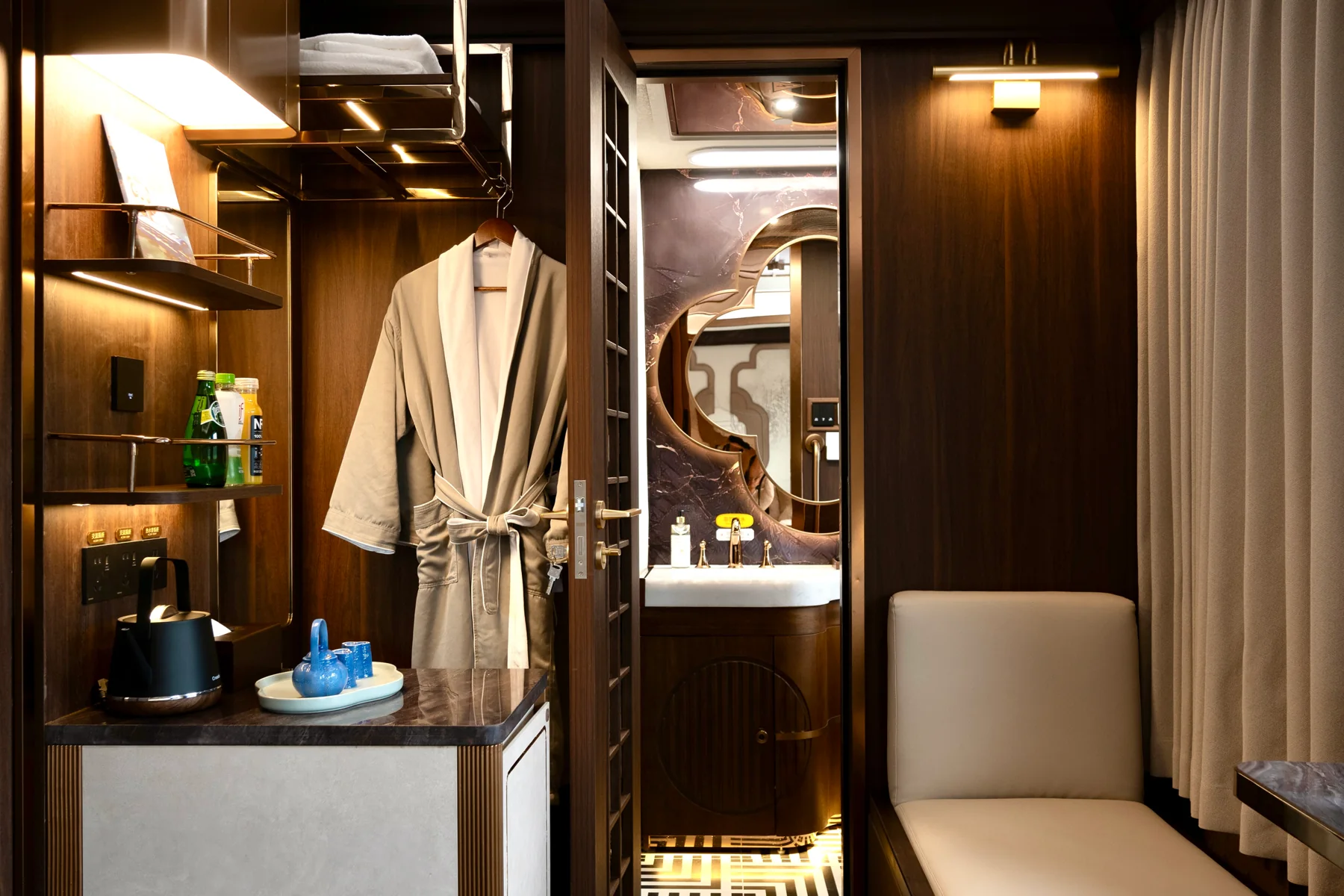
On boarding, identify the cabin number, sleeping places, storage and the facilities you will use most. Jin-Wo and Jin-Ta have different layouts. A wide-angle photograph of either category cannot tell you exactly where your own suitcase will fit. Give frequently used small items a clear place, and keep room for both occupants to move and prepare for the day.
It helps to agree where each person keeps documents and charging leads. When asking the butler for assistance, describe the specific facility or process you want to understand. Asking where laundry is collected produces a more practical answer than asking whether everything is included.
Before going to bed, check whether the following morning starts aboard or involves leaving for an excursion or hotel. For a day on the train, the overnight bag can be put away. For an early change, pack it the evening before, leaving the morning for breakfast and the meeting point.
Explore the cabin, dining and shared spaces
Establish whether you return that evening
Both Altay and Ili include nights in ground accommodation. A day’s sightseeing does not automatically finish back in your train cabin. Three short questions help: where do we sleep tonight, when do we next board, and who receives the overnight bag? If plans change, repack from the current briefing rather than an older screenshot.
The Ili and Kuqa service standard specifies a seven-seat executive vehicle for four guests. Other itinerary sections use a different coach arrangement with a stated share of seats left empty. These provisions describe transport in the relevant region; they do not mean a private vehicle for every guest throughout the holiday. Tell the team your party size and luggage needs in advance so the allocation can be confirmed.
Scenic-area transport can introduce another transfer after the road journey. Keep the group meeting details and tour-leader contact accessible. The departure team will settle the vehicles, meeting locations and scenic-area operating arrangements. Knowing how to rejoin the group is a useful part of the briefing, even for a short stop.
Prepare the next morning when you reach the hotel
After arrival, confirm your room and then the breakfast, assembly and bag-collection times. Accommodation descriptions may allow an equivalent hotel. Room category, bed arrangement and view need their own confirmation; a hotel photograph helps explain the setting but is not your room assignment.
Write hotel bed preferences separately from the train cabin request. A setup available aboard may not be available in every property along the route. For a third traveller or a child, check the sleeping arrangement for each night before departure instead of waiting until rooms are allocated at reception.
Laundry has collection points too. The material lists a collection in Beitun and another in Yining, with a different complimentary item allowance for each cabin category. Ask which items can be accepted, when they return and how any excess is charged. This can inform your packing, but should not be treated as a daily, on-demand service with same-day return.
A simple routine works well: put the next morning’s essentials together, recharge what you need and keep the remaining bag contents ready for collection. Adapt it to the actual schedule rather than to a fixed hotel routine.
Check cabin and companion accommodation questions

Use the return to your cabin to reset
When you return aboard, separate used clothes from the next section’s supplies and charge communication devices and batteries. A familiar private space makes this easier. How much time is available still depends on the day’s activities and train operation, so avoid leaving essential preparation until the last minute.
After the Kuqa-related visits on Day 10, the programme connects with the train towards Kashgar. The return phase follows Day 13, with more time aboard on Days 14 and 15. Those days offer an opportunity to organise photographs and luggage instead of leaving all packing until the final morning.
Before reaching Chengdu on Day 16, reconfirm the airport transfer or post-journey hotel arrangement. Arrival, collecting bags, ground transport and airport procedures each need time. Ask the team to assess a flight against that departure’s operating plan rather than relying on another traveller’s previous connection.
Questions worth asking
If my suitcase stays aboard, do I still need an overnight bag?
Yes, a smaller bag is useful for the nights in hotels. Leaving the large case on the train reduces handling, but clothing and daily essentials needed away from the cabin should travel with you.
Can four companions share the same ground vehicle?
The Ili and Kuqa material specifies four guests per vehicle. Give the team the party details, any child-seat needs and luggage requirements so the actual allocation can be confirmed.
Will I have to carry all my luggage myself?
Luggage handling is included in the product material. Learn the handover points and procedure; continue to look after your documents, valuables and personal essentials.
Before each change, return to a few practical questions: where will you sleep, when will you reach the train again, and what must remain with you? Add the answers to your itinerary and the preparation has a clear order.
Sources and programme version
Prepared from the Chengdu transfer, retained-cabin, luggage and ground-service descriptions in Tianfu’s October 2026 customer material for 2027. These are preparation suggestions; the assembly and baggage instructions issued for your group take precedence.