A JOURNEY IN PHOTOGRAPHS
Xinjiang: Let the Landscape Set the Pace
A photo essay about the space between snow-covered peaks, blue water, bare rock and the next departure.
Peaks / Lakes / Red rock / Village / Rail
OPENING FRAME
Time between departures.
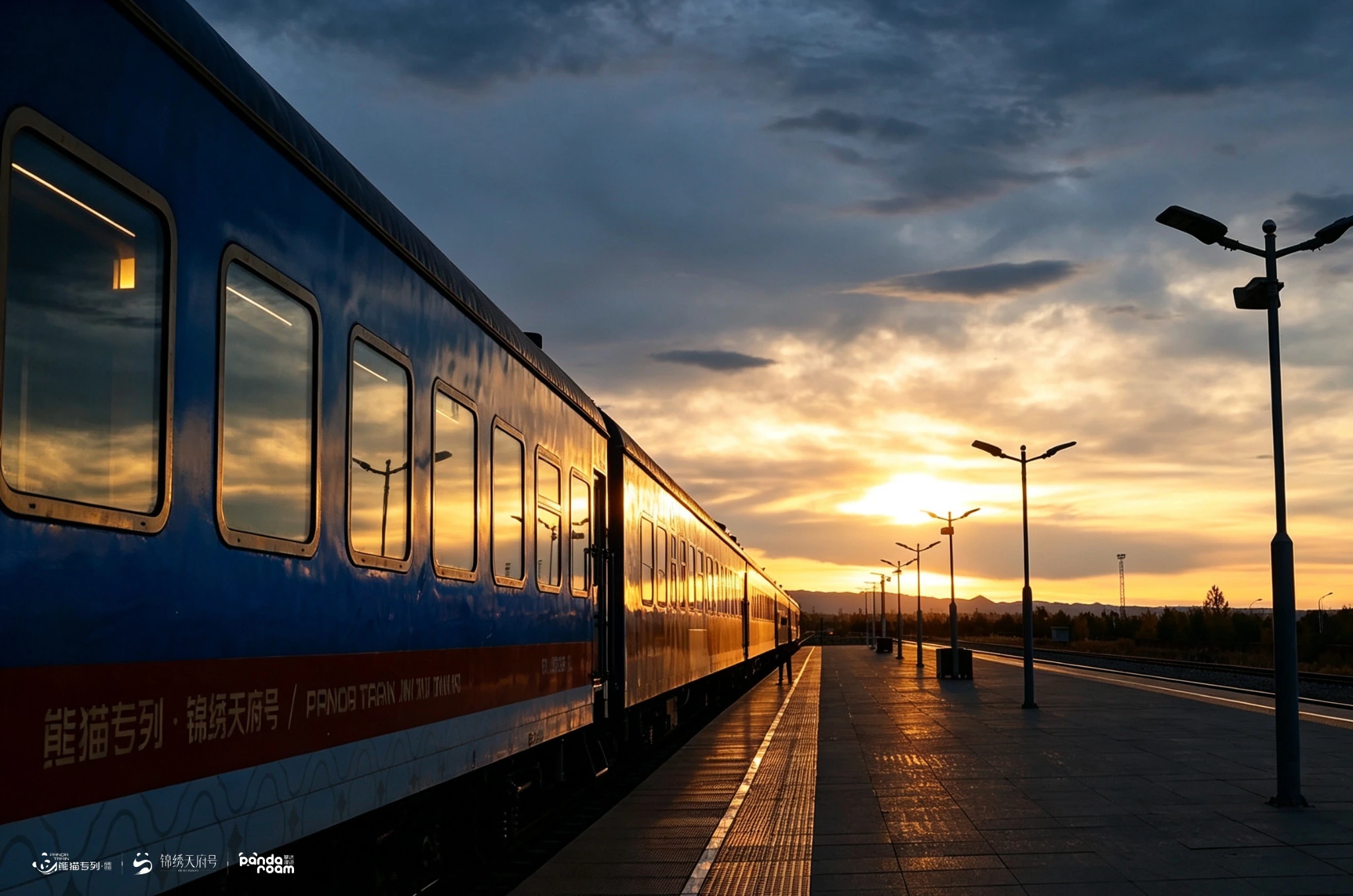
The train stands beside a platform under a yellow sky. Light catches its windows and runs along the blue carriages. Near the far end, the tracks and platform lamps draw together. This quieter photograph makes a good place to begin: it gives the mountains and lakes a setting, with departures, pauses and time spent looking out of a window.
Snow covers the highest ridges. Lower down, autumn trees hold their colour beside dark forest. Elsewhere in the album, red rock gives way to a line of wind turbines. These views belong to different places, but together they suggest a useful pace for Xinjiang: arrive, pause and look carefully before moving on.
01 / MOUNTAINS
Snow above the autumn trees
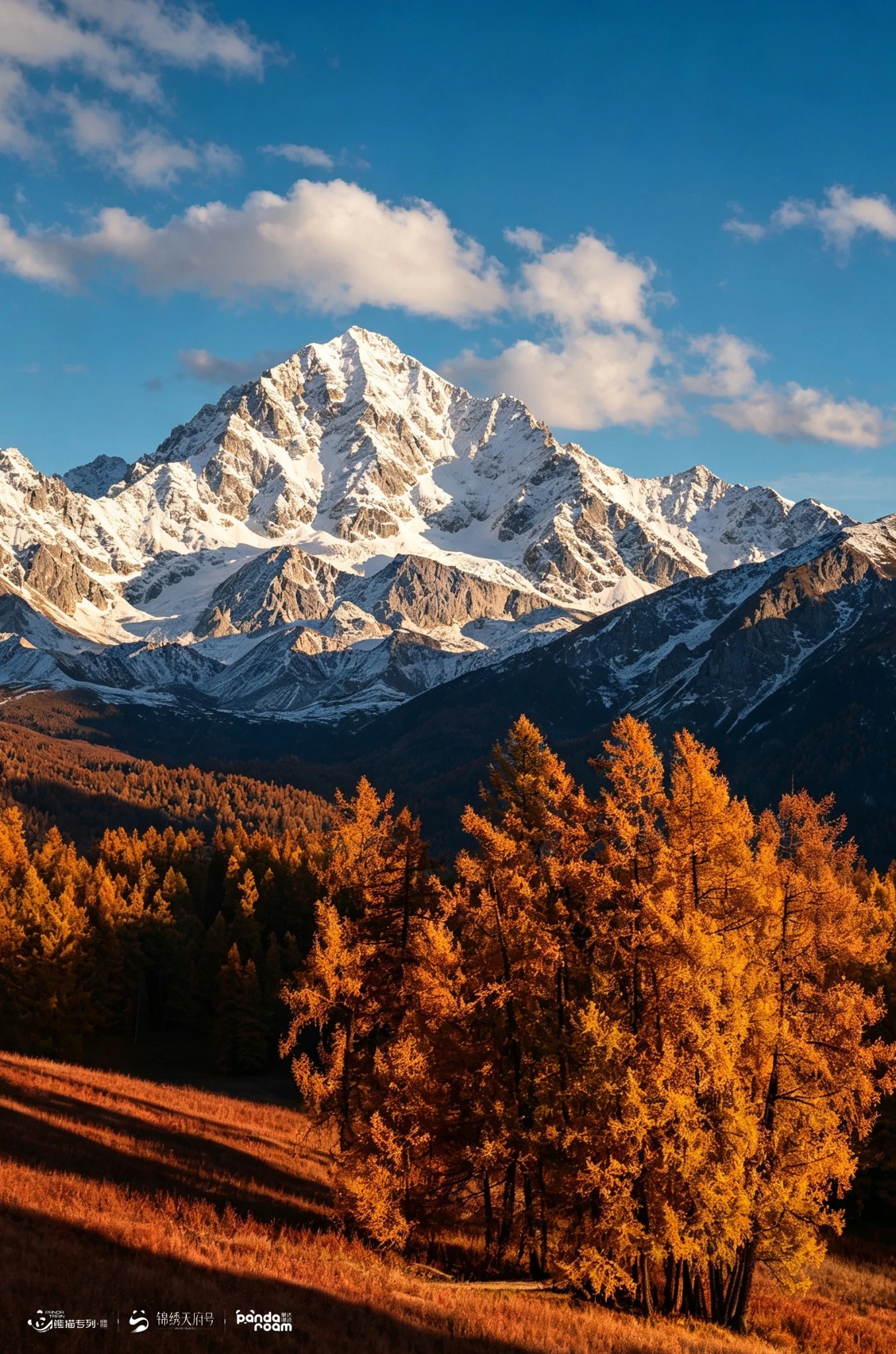
In the vertical mountain photograph, the foreground is full of yellow and orange trees. Above them, a white peak rises sharply against blue sky. Dark forest separates the two, giving the snow its brightness and keeping the view from becoming one flat field of colour.
The summit has ridges and cuts. The trees form loose groups, with space between their crowns. Snow remains high on the mountain while the lower slopes hold autumn colour. The photograph records those different conditions in a single frame.
Xinjiang contains more than one mountain system. UNESCO's account of the Xinjiang Tianshan describes peaks, forests, meadows, rivers, lakes and red-rock canyons. That regional context explains the variety without identifying the summit in this photograph.
The foreground trees deserve time of their own. Their colour is the first thing you notice, but the separate shapes of their branches and crowns keep you looking.
02 / WATER
Time beside the water
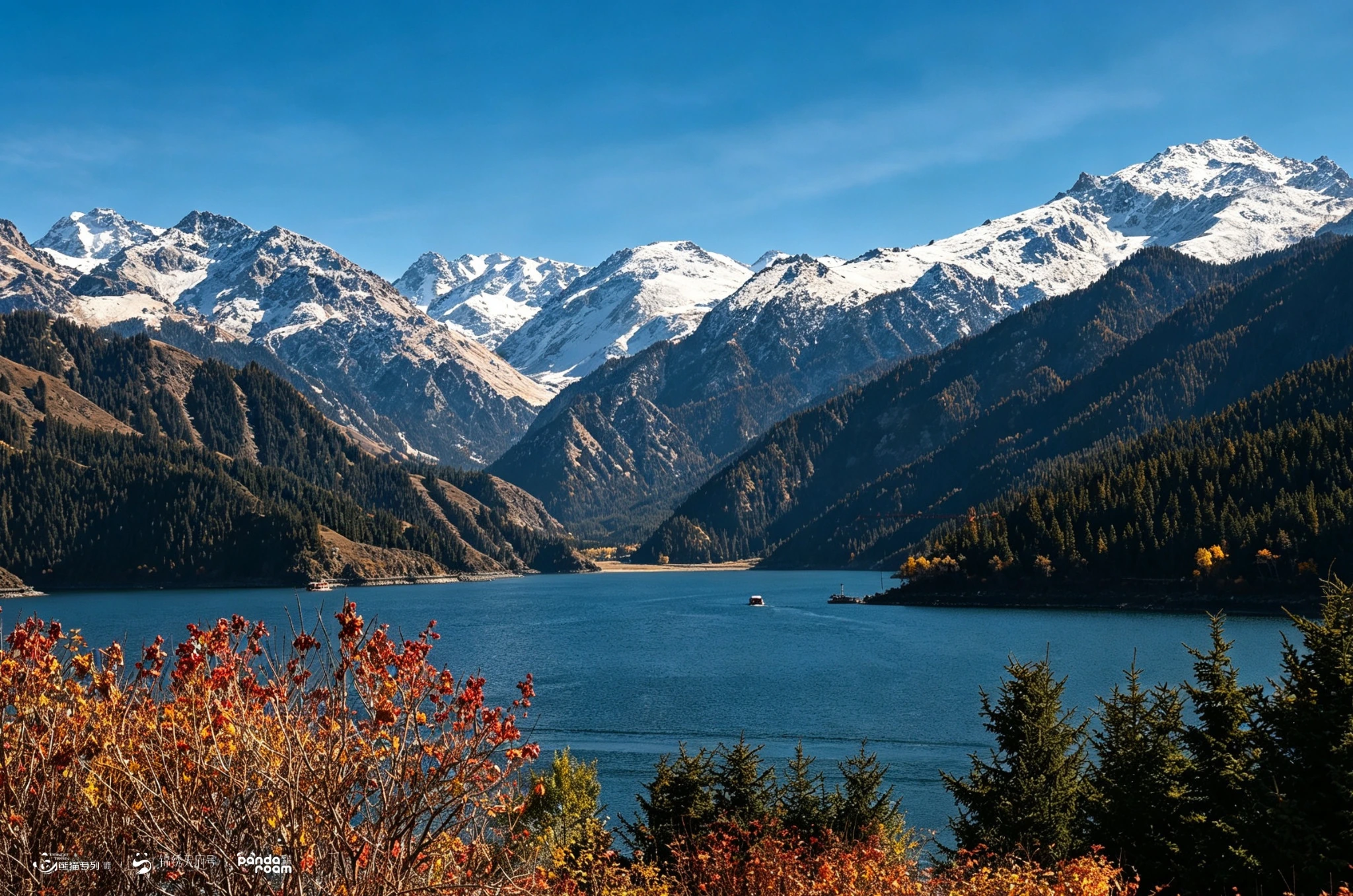
The lake photograph is a quieter composition. Water fills the middle of the frame, enclosed by dark slopes and a line of snowy peaks. Red leaves sit close to the camera, keeping the distant mountain wall from taking over the picture.
Look first at the shoreline, then at the top of the ridge. The eye travels through several layers. What appears to be a single blue surface becomes a lake with edges, corners and slopes descending into it.
A photograph gives a visit a useful second life. Back with the image, there is time to notice the dark trees along the shore or the way a patch of snow follows a gully. Those details were present from the start; they simply needed a longer look.
A lake does not have to fill a day with activity. There is enough in the changing distance between the near shore and the mountains beyond it.
03 / RED EARTH
Bare rock, with turbines on the horizon
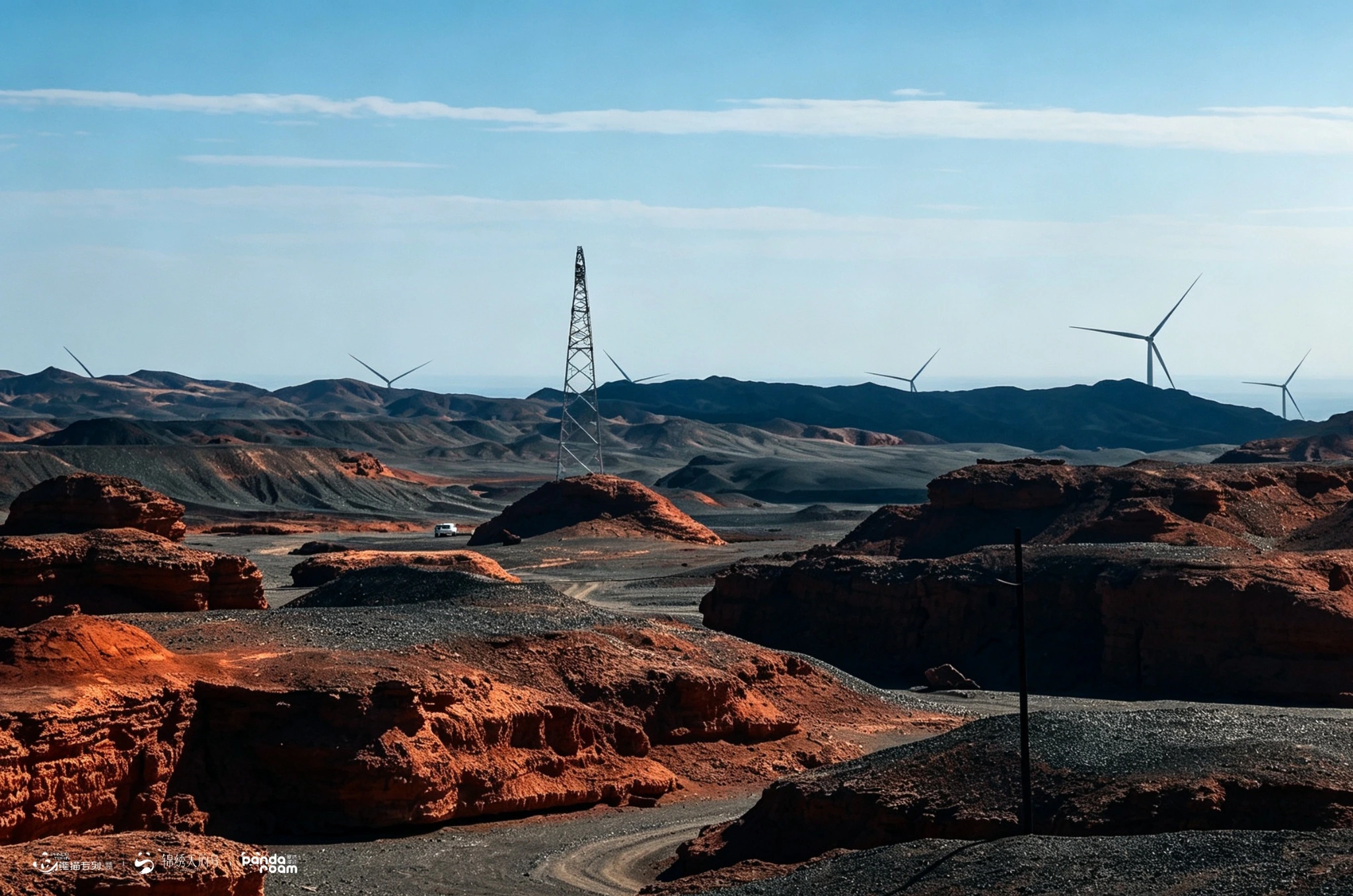
The red-rock photograph changes the pace. Rounded ridges cross a dry foreground. Some faces catch the light; others fall into deep shadow. Farther back, wind turbines stand against an almost empty sky.
Keeping the turbines in the frame makes the image more specific. The rock formations and the machines belong to the same view, while a road or small structure gives the eye something familiar for scale.
Small gullies divide the slopes and dark bands interrupt the red earth. The ridges overlap without quite repeating, their rounded edges softening a view that looked harsh at first glance.
For example, attractive photographs can sit beside one another on a page even when their locations are far apart. Their sequence is an editorial choice, not a promise that they fit into an afternoon's drive.
04 / VILLAGE
A village has a daily life
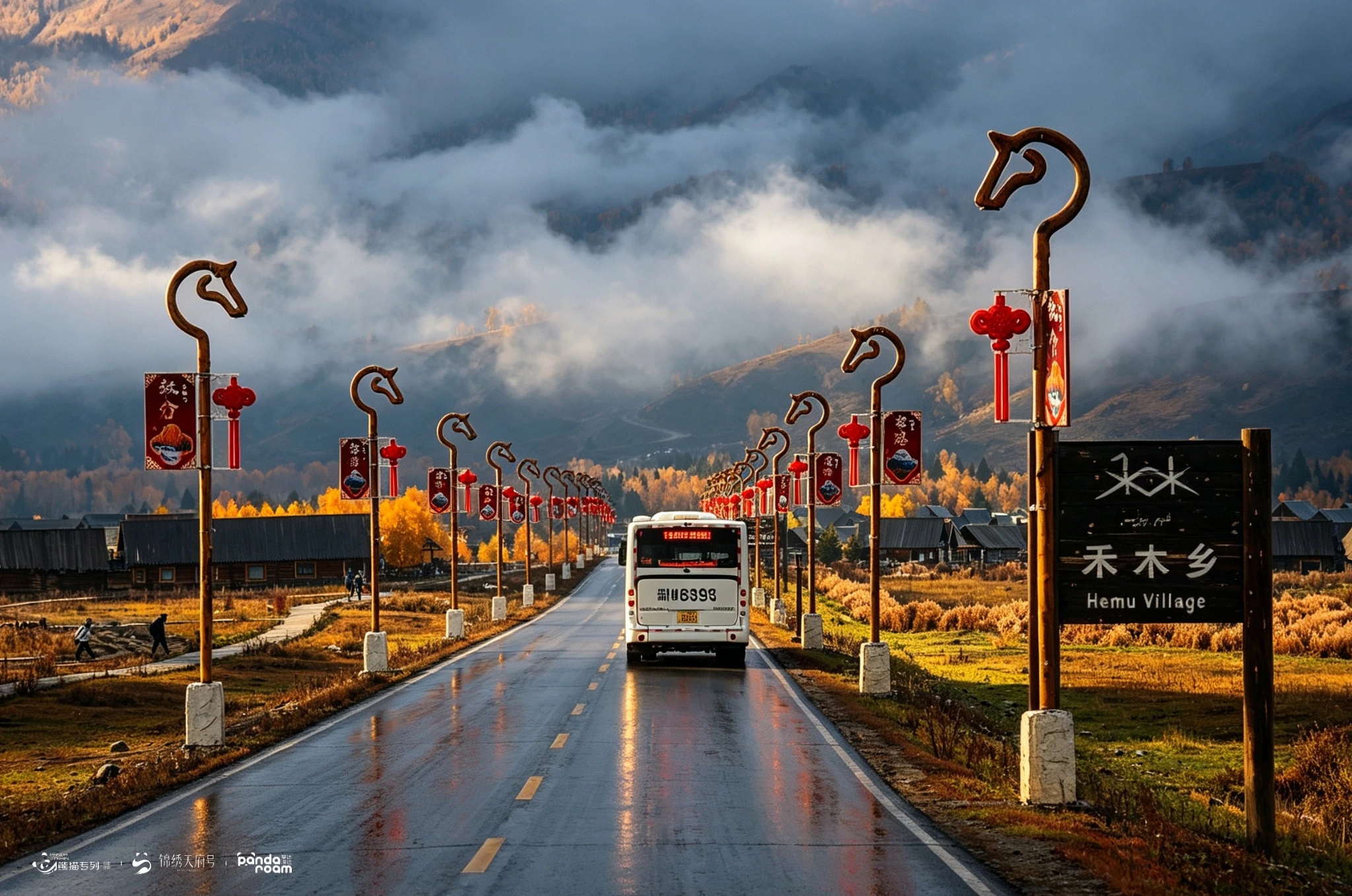
The northern photographs bring buildings back into the landscape. Hemu is a village in Burqin County, Altay Prefecture. One road sign names Hemu Village; a bus stands on a wet road and rows of lamps lead towards the trees.
Roofs, doors and fences give the scenery a human scale. The road must carry people going about their day as well as visitors coming to see the autumn trees.
A village is more than a backdrop. Use public paths, keep entrances clear and ask before photographing people at close range. A beautiful cabin may also be someone's home or workplace.
After distant views, a fence, doorway and sloping roof hold the eye at walking pace. The buildings sit together with the hillside close behind them.
05 / RAIL
Back on the platform
Return to the train photograph and the light has a different weight. After blue water, white peaks and red rock, the narrow strip of yellow sky feels almost domestic. The platform is a place to stand, wait and gather belongings.
The Chinese lettering identifies the train as the Panda Special Train, Jinxiu Tianfu. Light repeats along the carriages, brightest near the far end. The photograph does not identify the station, route, timetable, fare or service level.
Travel includes these in-between moments. A station can hold the day's attention as fully as a mountain viewpoint, especially when there is no need to take another picture immediately.
Xinjiang is too varied to become a completed list. For now, there is plenty to return to: a red leaf beside blue water, turbines beyond a ridge and light in a waiting train's windows.
FIELD NOTES
Notes for a journey of your own
Xinjiang is an autonomous region in northwest China. The regional government's geographical outline describes the Altai Mountains in the north and the Tianshan across the central belt. These names orient a journey; they do not identify every summit in the photographs.
Hemu is the village named on the road sign. The NDRC profile records Hemu in Burqin County, Altay Prefecture. Kanas is in the Altai Mountains, according to the Xinjiang tourism authority, but a lake or cabin should not acquire either label simply because it looks familiar.
| Planning point | What to check |
|---|---|
| Route | Identify the places before setting the route. The mountain, lake and red-rock viewpoints remain unconfirmed. |
| Transfers | Check travel times between the actual stops. Give transfers and rest their own time. |
| Conditions | Check current road access, visitor transport, weather and accommodation before departure. These photographs are not live conditions. |
| Village visits | Use permitted paths, keep entrances clear and ask before close photographs of residents or entry to private areas. |
For example, the lake picture and the train in golden light can sit on facing pages, but the album does not identify the station or the distance between them. A travel plan must establish both before assigning a transfer time.
The village road is wet beneath low cloud while the mountain frame has clear blue sky. Neither establishes a forecast, temperature or reliable order of stops. Plan from current local information, not weather inferred from a different frame.
EDITORIAL NOTES
About the text and photographs
This essay was prepared by the Jinxiu Tianfu editorial team with AI assistance and human review. Photography is by the Panda Roam photography team. The editorial team did not report from these locations; photographic authorship and editorial preparation are separate roles.
The selected Xinjiang photographs retain their full frame and existing watermarks. Exact locations of the mountain, lake and red-rock photographs remain unconfirmed, so they are not labelled as Sayram Lake, Kanas, Kuqa or a named geopark.
The train image establishes the train name, but not its station, route, timetable, fare or service level. Its golden light does not establish the time of day.
Review methodology covered the five selected photographs. The editorial team compared file hashes, inspected available metadata, and checked visible signs and lettering against the four primary sources linked on this page.
- File-hash comparison confirmed that the five photographs displayed on this page are unique within the article; the Hemu road photograph is reused from the existing Golden Altay story rather than stored twice.
- EXIF inspection of the selected source files found no capture-time or GPS data.
- Caption review used visible signs and lettering plus the primary geographic sources linked on this page.
Background source: UNESCO, Xinjiang Tianshan. It describes regional landscape diversity and does not authenticate the locations of these photographs.
Five display images are published as full-frame WebP copies. Internal photo notes, original download links and file hashes remain private review material.
How can you join a Jinxiu Tianfu journey?
Start with the current Xinjiang itineraries to compare trip lengths, stops and daily arrangements, then read the booking guide. Tell the team your intended travel year, party size, cabin preference and any dietary or mobility assistance needs, and obtain written confirmation for your chosen programme.
- Explore current Xinjiang itineraries
Compare trip lengths, routes and daily arrangements.
- Read the booking guide
Check the chosen programme, applicable terms and written confirmation.
- See cabin photographs
Understand the cabin space and consider your party's needs.
- Ask the Jinxiu Tianfu team
Share your intended year, party size, cabin preference and specific needs.
Reports and photographs record a particular journey or photographed scene. Current departures, prices, availability, staffing and service arrangements depend on the chosen programme and written confirmation.