MEDIA READING · LIFE ON BOARD
Jinxiu Tianfu in Nanyang Siang Pau: Life Between the Stops
A meal beside the window, a shared moment in the lounge, a photograph before departure. Leesan’s Jinxiu Tianfu column in Nanyang Siang Pau and these journey photographs invite a different question: not just where does the train go, but how do you spend the time along the way?

Why the time between stops matters
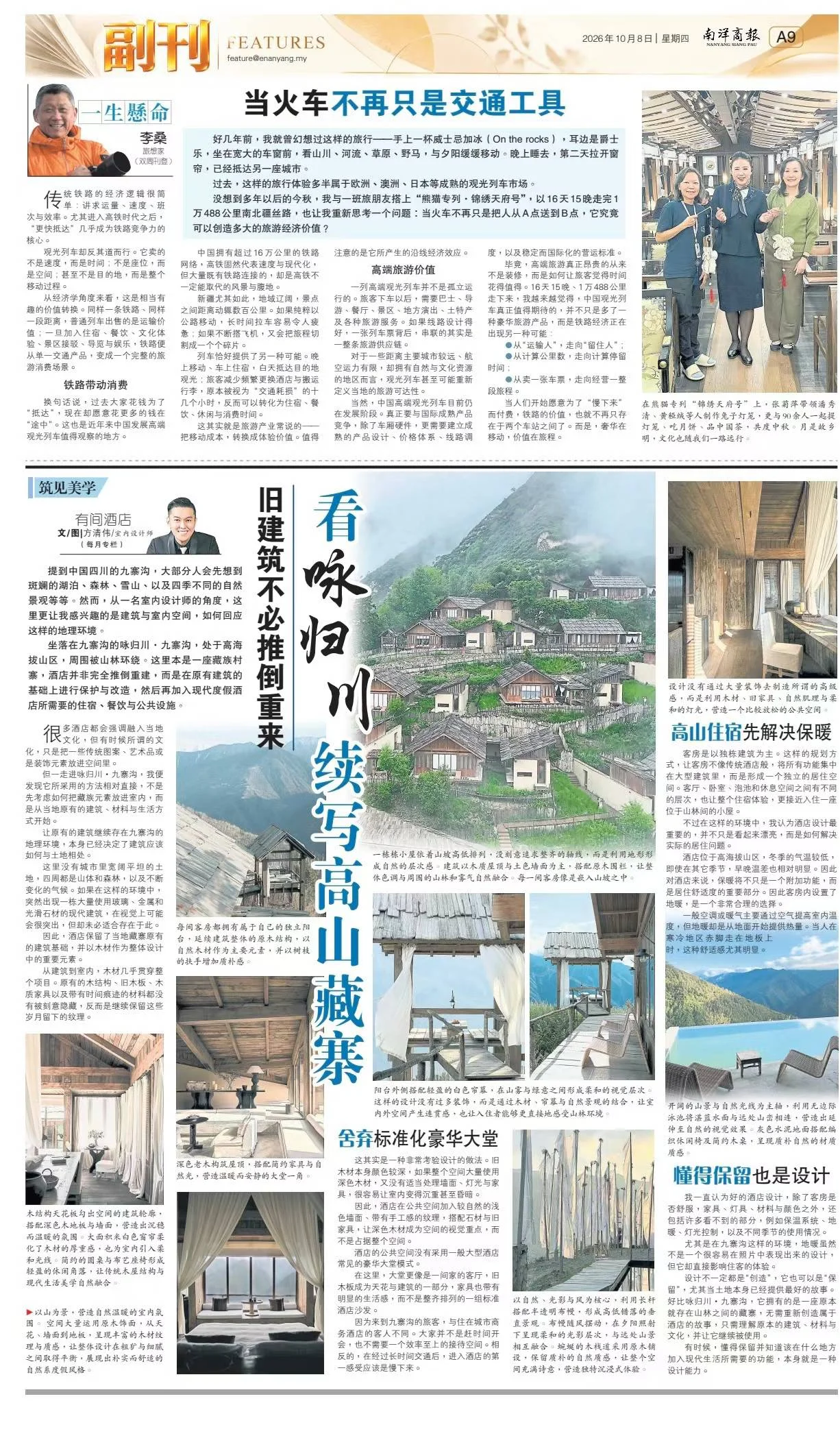
In 当火车不再只是交通工具 (When a train becomes more than transport), Leesan reflects on a Jinxiu Tianfu journey through northern and southern Xinjiang lasting 16 days and 15 nights over 10,488 kilometres. Those figures belong to his past trip. His subject is how rail travel brings accommodation, meals and visits together, rather than simply carrying a passenger between two stations.
Read Leesan’s Chinese column on KITA 101
Print source: Nanyang Siang Pau, Features A9, 8 October 2026, 一生懸命 column. The KITA 101 page also records this publication credit.
A photograph before departure
The welcome photograph places a panda character beside the Jinxiu Tianfu name. It is a more personal introduction than an empty carriage: a guest has already found a moment of play before the journey begins.
For someone planning a trip, it also raises practical questions. Where is the meeting point? When does check-in begin? How is luggage handled? Confirm these details in your departure information so there is time to settle in before boarding.
A meal with a changing view

Beyond the window lies open country; inside, small dishes and tea ware fill the table. The scene brings dining and the passing landscape into the same frame. It records one meal on one journey, rather than a menu promised on every departure.
When comparing luxury train itineraries, ask which meals are served on board and which are taken at destinations. Tell the team about allergies or dietary needs before booking, and ask what can be accommodated. These details tell you more than the simple phrase “meals included”.
Beyond the cabin door

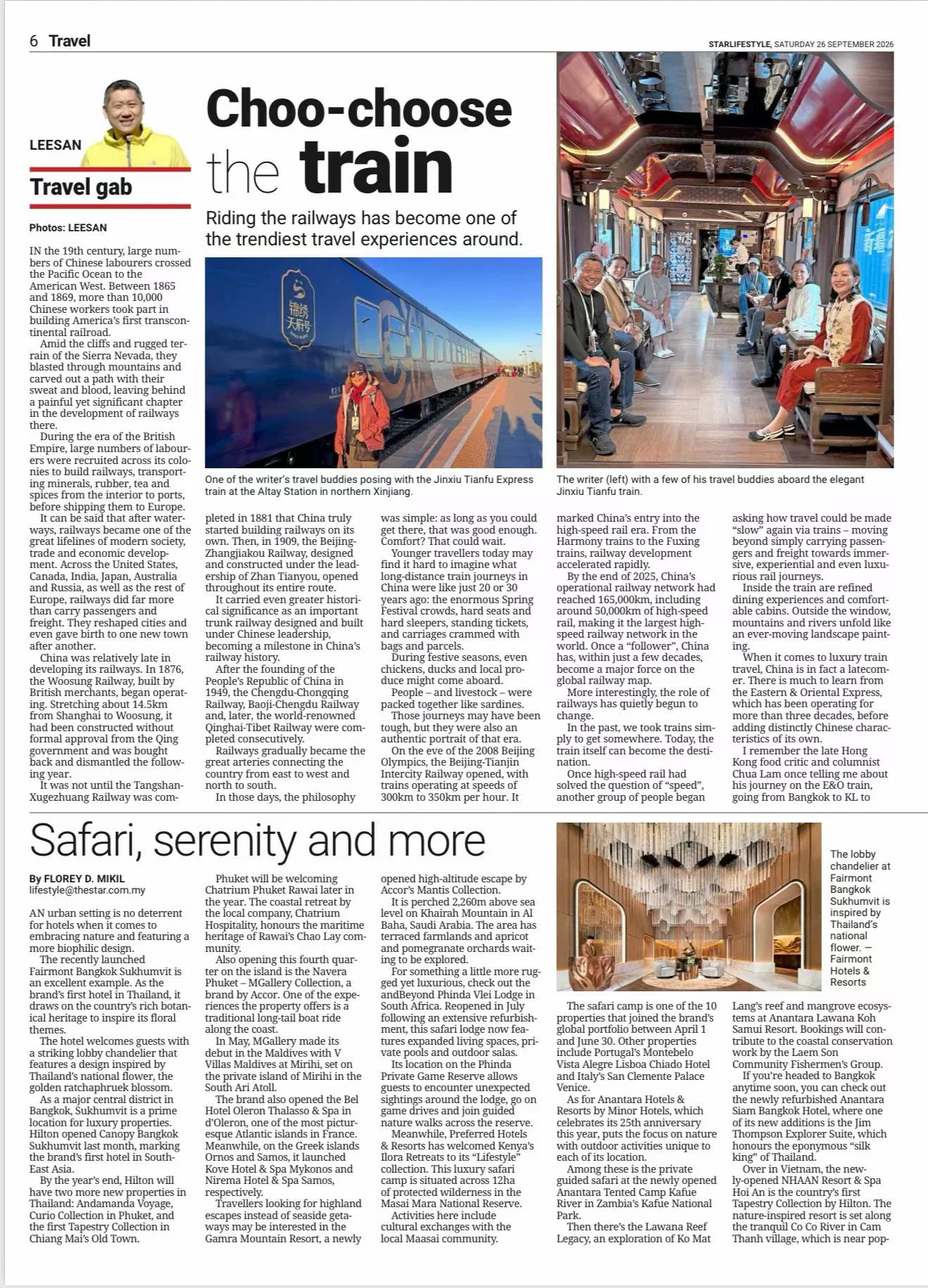
A tambourine, applause and smiling guests give the lounge a different mood from a private cabin. One space offers a retreat; the other gives fellow travellers a reason to meet. The photograph captures a shared activity, not a year-round entertainment schedule.
In Choo-choose the train for The Star, Leesan also discusses food, entertainment and the connection between the train and off-train experiences. When reading an itinerary, look at the time on board as well as the stops. Does its balance of visits, rest and shared activity suit the way you like to travel?
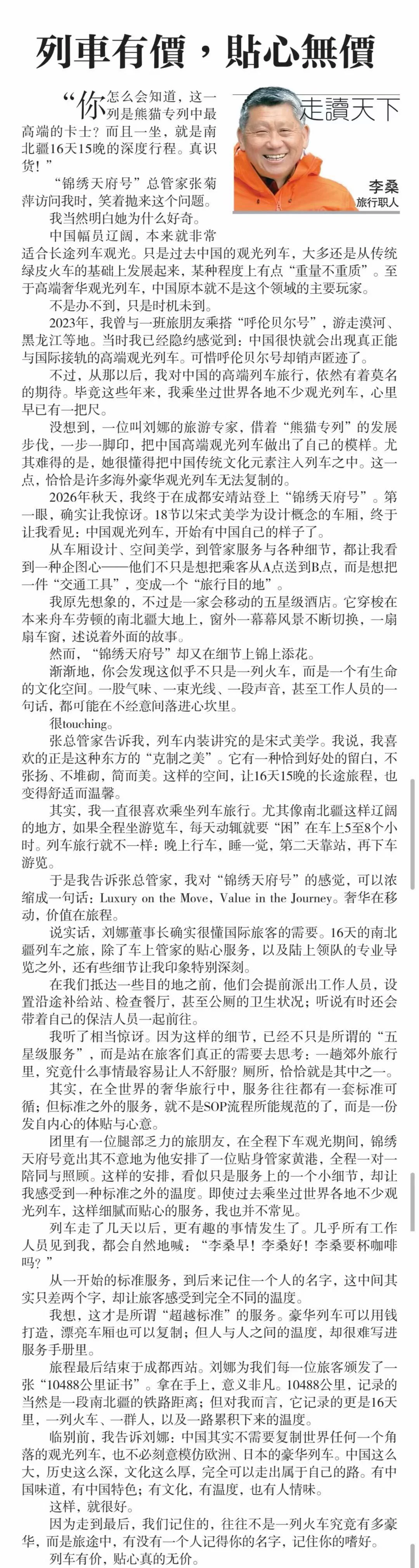
Care starts with a specific need
The supplied Chinese column 列車有價,貼心無價 turns to thoughtful service. Leesan describes staff remembering names and preparing ahead for visits. It shares a theme with the service article discussed in our earlier The Star story: small acts of care can become lasting memories.
If someone in your party needs mobility assistance, language support or dietary adjustments, raise that before booking and obtain a written response for your chosen departure. A travel column offers a view of the experience; your own arrangements need a separate, practical conversation.
Find the journey that fits you
The historical trip in the coverage is not a current sales programme. Use the daily itinerary and written confirmation for your chosen year, departure and cabin.
Start with the current Xinjiang itineraries to compare trip lengths, stops and daily arrangements, then read the booking guide. Tell the team your intended travel year, party size, cabin preference and any dietary or mobility assistance needs, and obtain written confirmation for your chosen programme.
Reports and photographs record a particular journey or photographed scene. Current departures, prices, availability, staffing and service arrangements depend on the chosen programme and written confirmation.
Check the chosen programme, applicable terms and written confirmation.
Start with the duration, stops, daily visits and overnight arrangements.
Compare the space with how you prefer to rest and travel.
Share your party size, preferred date and specific needs; confirm the applicable quotation and inclusions.
Explore the service observations in A thoughtful service.